- Harry Brook says supporters have “every right to be annoyed” after his New Zealand nightclub incident, and admits: “I’ve made a terrible mistake.”
- He insists it did not change how he played, but accepts he has “work to do” to rebuild trust and says England’s new midnight curfew was a “group decision”.
- Brook also rejects claims of a wider problem, saying: “there isn’t a drinking culture”, while conceding England have tightened behaviour standards on tour.
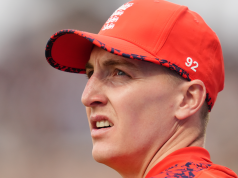
England captain Harry Brook has said supporters have “every right to be annoyed” after details emerged of an incident on the tour of New Zealand that preceded the Ashes, when he was punched by a nightclub bouncer in Wellington. The episode happened the night before the third one-day international on 1 November, a match England lost, and Brook was later fined and given a final warning, though the punishment only became public after England’s 4-1 Ashes defeat in Australia.
Speaking to BBC Sport in Colombo, where England begin a white-ball series against Sri Lanka, Brook addressed the incident publicly for the first time and accepted the damage it has done. Asked if he understood the anger at England’s performances and the off-field stories, he replied: “Definitely. They have every right to be annoyed. I’ve made a terrible mistake.
“I’ve put myself in a situation which I shouldn’t have done. Did it affect my cricket? I don’t think so. I’d have still played the same way. Obviously, I didn’t get a score that I’d have liked, but I still played the same way.
“I’m extremely sorry to all the supporters for what I did in New Zealand. I’ve got to try and regain their trust again in my ability, in my cricket on the field and off the field. I’m hoping that they can expect I’ll be slightly different away from the game. I’ll be more professional.
“That’s what I’ve got to do now for the rest of my career, hopefully. I just want to be back playing as good cricket as I possibly can be.”
Brook, 26, said he was on his own when the Wellington incident occurred, and that he informed England management during the match itself. He also said he feared he could lose his job, but did not think resigning was the right route.
“It was definitely playing through my mind,” Brook said when asked if he expected to be sacked.
On resigning, he added: “No, it never came into my mind. I left that decision to the hierarchy. If they’d have sacked me from being captain, then I’d have been perfectly fine with it as long as I was still playing cricket for England.”
Brook did not want to “go into any details” of what happened in Wellington, but said it began with some players “going out for food”, and then became his responsibility alone.
“There was no intention of going out, no intention of putting ourselves in a tricky situation,” he said.
“I took it upon myself to go out for a few more and I was on my own there. I shouldn’t have been there.
“I was trying to get into a club and the bouncer just clocked me, unfortunately. I wouldn’t say I was absolutely leathered. I’d had one too many drinks.”
He did not confirm when he returned to the England hotel, saying only it was “late enough”. The next day he made six as England fell to 44 5 in a chase they eventually lost by two wickets. Brook said he reported the incident mid match, was later fined around £30,000 and given the final warning, and that the disciplinary process was completed before the Ashes.
Beyond the incident itself, England’s tour of Australia drew criticism for preparation, standards and optics, including a break in Noosa where players were photographed drinking. Brook was one of those pictured, and he was asked why he was willing to be seen drinking in public after the New Zealand trouble.
“We weren’t exactly happy to be photographed. We were looking over our shoulder every second to see if there’s a camera there,” Brook said.
“We were drinking responsibly, bar one situation. Other than that, we were completely in control of what we were doing. We were just going out and having a drink and it was nothing silly.”
Brook said he has apologised directly to teammates and knows trust needs rebuilding.
“I’ve got a little bit of work to do to try and regain the trust of the players,” he said.
“I felt like I needed to say sorry for my actions. It’s not acceptable as a player, but as a captain it’s really not acceptable to do what I did in New Zealand. I hold my hands up.”
He also pushed back on the idea England’s squad has a wider issue, while accepting standards have to be tighter in public, particularly on long overseas trips.
“It wasn’t just drinking,” he said. “We weren’t just going out and getting leathered every day. We were having a few drinks here and there.
“We were playing plenty of golf, going to nice cafes, having coffees but we had a few drinks here and there. I don’t think that’s a bad thing. It’s just what human beings do.”
England have introduced a midnight curfew for the Sri Lanka tour, and Brook said it was agreed internally and framed as a practical step, not a punishment.
“That’s been made as a group decision,” said Brook. “We think that it’s the best thing going forward, for the time being, to be able to put us in situations where we can win games of cricket and perform at the best of our ability.
“I don’t know what it’s like in other sports, but it’s probably a lot stricter in rugby, football and stuff like that. For the time being, I think it’s fair enough.”
Brook was Stokes’ vice captain during the Ashes, and said England’s Test captain helped him process the fallout, drawing on his own experience after a 2017 incident that cost him an Ashes tour.
“He obviously wasn’t best pleased at what I’d done, but he tried to help me through it,” said Brook.
“He knows exactly what it feels like to be in this situation. We had a few conversations, but we quickly moved on from that and tried to look forward to the Ashes.”
England begin their Sri Lanka series with the first one-day international on Thursday. Brook also confirmed Jacob Bethell would captain the white ball teams if he is unavailable, and England have brought Carl Hopkinson back on a short term basis as a fielding coach for the T20s and the World Cup.